Wednesday, December 10, 2014

Feeling Guilty

 As I reached towards the end of Loung Ung's book, I became guilty of two things (Don't worry, I didn't commit any sins). 
        First, I was guilty of how lucky I was compared to Ung. My mom cooked lasagna for me today. Lasagna is my favorite food. However, I lost my appetite because I felt strangely queasy after reading about Loung Ung's fight against hunger. The way she writes gave me a sense of what it was like to be there: to suffer and go through the horrors she experienced. I politely asked my mom if I could eat it later (my mom was shocked and wondered if something went wrong today at school) and reread the sentence that made me feel so uneasy: "I have my greatest dream and my worst nightmare. I am sitting alone at a long table. The table is covered with all of my favorite food in the world...I wake up feeling depressed and guilty. Always the hunger pains are there, never ending, never leaving me" (80). It seemed as if I were inside Loung Ung's nightmare, except what happened in her dream was something very common for me. 
         Second, I was guilty of my misconception. Before break, Mr Tangen told us to write down parts of the memoir that we doubted the author actually remembered. My list was pretty long because honestly, when I first started the book, I 
Heinous- Extremely wicked
wondered how a 5-year-old child could remember all the minor details and dialogue. For example, Loung Ung narrates, "Though the Angkar says we are all equal in Democratic Kampuchea, we are not. We live and are treated like slaves," (66) and "The temple walls are decorated with carvings of people, cows, wagons, daily life, and battle scenes. Guarding the ancient steps are giant granite lions, tigers, eight-headed snakes, and elephants." (67) Seriously, who remembers all those details and feels all those intense emotions when he or she is only five? Then, as I got further into the story, it occurred to me that no one would ever forget those powerful events and emotions. For Loung Ung, moving out of Phnom Pehn was a major turning point in her life that changed her forever. 
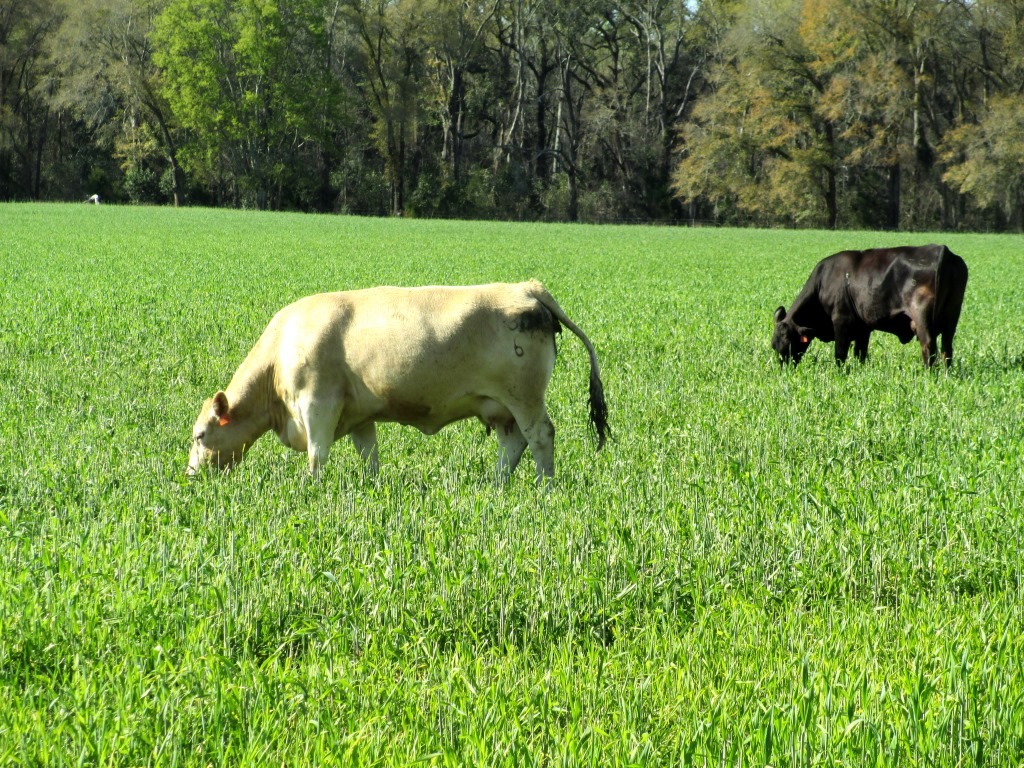
Forage- To wander in search of food

          Even though I have more to digest from Loung Ung's writing, I'm satisfied that I've learned from my misconceptions. Now I can go back and finish that lasagna.

Monday, November 17, 2014

Living Under Genocide

      I have never had to hide my identity from the Nazis or Cambodian soldiers, but somehow I could connect with Loung Ung and Anne Frank's accounts. Maybe because they were homesick and far from their hometowns, just like I miss Seoul. Though their descriptions of war and tragedy seemed distant to me, I could understand how homesick and out of place they felt. After all, Colombia is a long way from Korea. I could relate with Ung as she pleads to her father, "Why can't we go home to our own house? The soldiers promised that we could go home after three days" (39). Also, both stories are told through the eyes of young, innocent girls who convey the raw truth rather than manipulating the plot. Through these similarities, I could connect and learn about World War II and the Cambodian Genocide more than I did through AP World History textbooks. For example, while I read Anne Frank's diary, I learned a lot about what really happened during World War II: innocent people dying at the hands of an obsession. I felt similar emotions while reading the first fifty pages of First they Killed My Father. The book clearly explains the context and history of Cambodia, which made it easier to follow along even though I hadn't had much background information about Cambodia.
disclose-reveal a secret
    To me, Loung Ung's account more powerfully conveys her deep emotional distress by narrating on every small detail of the genocide than Anne Frank's diary. Ung recounts this story from a five-year-old-girl's perspective, which is interesting because it is based on a combination of innocence, confusion, curiosity, and fear. For example, she consistently asks her father: "Why are they doing this, Pa?"(27) or "I don't understand. What does all this mean?" (27) I could understand how frightened she might have felt to not tell anyone about her family's secrets and live under the eye of Cambodian soldiers.
ammunition- supply or quantity
 of bullet or shells
        First they Killed My Father is different from the Diary of Anne Frank because it tells a more unique and unknown story. When people are asked to recall genocides during the 20th century, the Holocaust and Stalin's Purge are the main events that come to their minds. However, people (like me) rarely remember the Cambodia genocide or they might have never heard of it. Millions of Cambodians such as  Loung Ung equally suffered from all kinds of atrocities and violence, but it is not an event that many people tend to be aware of, which makes the book so fascinating and special.

Monday, October 6, 2014

Learning History From a Memoir Instead of a Textbook

 So far, First They Killed My Father is an intimate and personal account that gives the reader a sense of what it was like to be in Cambodia during the 1970s.When I picked up the memoir with a title as unequivocal as First They Killed My Father, I definitely knew it wasn't going to be funny or comical. Still, I wanted to find out more about the history of the Cambodian civil war that cost the lives of so many people. After I chose the book, I was worried the memoir would be a dry, historical, and objective account of the Cambodian Genocide during the 1970s. Instead, Loung Ung shares the personal and brutal story of what happened to her through the eyes of the innocent child that she was at the time, which makes it so different from other memoirs written by adults who understand the situation.

        The dominant tone of the author throughout the first fifty pages is nostalgic. The author is apparently homesick: she misses Phnom Penh, where she was free, happy, and safe. She is also apprehensive and baffled because she doesn't know where and why her family is leaving and whether she will ever come back to Phnom Penh. Her family is not giving her answers, so she just has to follow her parents and worry to herself.

Wednesday, October 1, 2014

Collecting My Final Reflections


        The Narrative of the Life of Frederick Douglass' ending does not seem particularly new because so much of it has been incorporated into what I had already known about Frederick Douglass and the abolition of slavery. I had known that Frederick Douglass was an abolitionist and I had viewed abolition as something that was obvious and incontestable. However, I realized that this narrative must have been a huge revelation when it was first published, because at that time slaveowners were blind towards slavery's evils and had a reasonable justification for slavery: religion. We easily tend to deceive ourselves into believing that what is accepted by the general population as normal behavior is also justifiably correct. We rarely question our customs, and even if they are contested, they become well justified and defended because everyone follows those customs. Slaveholders must have considered slavery as something totally acceptable because slavery was legitimate and reasonable back then.
      The ending also gave me a feeling that the story was incomplete with many gaps. However, I understood that Douglass deliberately left out that information to protect the escape of other slaves: "Were I to give a minute statement of all the facts, it is not only possible, but quite probable, that others would thereby be involved in the most embarrassing difficulties" (Page 99). After all, the title of the book is Narrative of the Life of Frederick Douglass, an American Slave, not Narrative of the Life of Frederick Douglass, an Escaped Slave. The narrative ends at the right time, when Douglass is no longer a slave (although, legally, he was) and enjoys his new freedom. In fact, that missing chunk of the other part of his life motivated me to research and learn more about Douglass' escape and his accomplishments as an abolitionist.
     Despite the missing details, I was very satisfied with Douglass' triumph of finding his voice and passion as a public speaker, anti abolitionist, and an author. Initially, Douglass honestly confesses, "I felt myself a slave, and the idea of speaking to white people weighed me down" (Page 112). But eventually, he frees his mind and burden as he states, "...but a few moments, when I felt a degree of freedom, and said what I desired with considerable ease" (Page 112). For Douglass, freedom was not only his escape from slavery, but also an opportunity to write and share his philosophy and experience. Achieving freedom through writing was his way of thinking and an attitude towards the rest of his life. His freedom connects with that of Darin Strauss from Half a Life because Strauss also starts his therapy and freedom through writing his book and sharing his story of the accident. 

fetter: a restraint on
 someone's freedom
dilapidated: in a state
of despair and ruin
insurrection: violent uprising
against an authority

Saturday, September 20, 2014

The Three Contradictions

Throughout chapters 9 and 10, Douglass continues to 
languish-lose vitality;
fail to make progress
describe the dehumanization of slaves with gory and violent details. Douglass has proved that slaves were beaten in body and soul until they broke and obeyed their masters. Douglass admits that "Mr. Covey succeeded in breaking me. I crushed, my intellect languished, the disposition to read departed, the cheerful spark that lingered about my eye died" (Page 71). Reading this quote even made a reader like me view Douglass' escape and resistance as hopeless. 
rekindle- light or set on fire;
arouse or inspire an emotion
      However, Douglass' steadfast and firm beliefs despite his harsh circumstances dumbfounded me. The first contradiction appeared when slaveowners succeeded in breaking hopes of slaves, but still Douglass regained his spirit, defiance, and determination to be free after he saw a possibility of escape during the battle with Mr Covey. According to Douglass, the battle "rekindled the few expiring embers of freedom,    and revived within me 
a sense of my own manhood. It recalled the departed self-confidence, and inspired me with a determination to be free" (Page 78). 
     The second contradiction I noticed throughout these chapters was the slaveowner's justification of slavery through religion. I would identify that justification as a false Christianity, a hypocritical reasoning to make themselves feel better of their brutality. Douglass demonstrates the contradiction between the peaceful tenets of Christianity and the violent actions of slaveholders by stating, "Prior to his conversion, he relied upon his own depravity to shield and sustain him in his savage barbarity; but after his conversion, he found religious sanction and support for his slaveholding cruelty" (Page 63). 
     The last contradiction is that according to Douglass, the Douglass before the battle and after the battle are two different identities. He recounts this as a transformation from a slave who gave up literacy into a determined man, a slave who learned how to love,  and an enthusiastic teacher. The battle also gave Douglass an opportunity to hold a Sabbath school to educate slaves and spur a sense of rebellion in them: "I, therefore, commenced early to ascertain their views and feelings in regard to their condition, and to imbue their minds with thoughts of freedom" (Page 86). The opportunity to educate fellow slaves created a sense of kinship and affection, an emotion he has never felt before. For example, Douglass confesses,"I can say, I never loved any or confided in any people more than my fellow slaves... I believe we would have died for each other" (Page 86). I couldn't help feeling optimistic and curious of what would happen next as the novel took a positive turn from the rough incidences with Mr. Covey.

Imprudent- Not showing care for
the consequences of an action
Profligate- Recklessly wasteful
in the use of resources
destitute- extremely poor;
completely lacking


Thursday, September 18, 2014

Mon Enfance

Maintenant, je ne suis pas l’enfant qui était insouciante tout le temps et sans problèmes. J'ai seize ans, j'habite à Bogotá et je vais à l'école Colegio Nueva Granada.
    En ce moment, je suis très occupée avec trop de choses à faire. J’ai beaucoup de travail et devoirs pour mes classes, et toutes sont difficiles. Je suis préoccupée pour mes examens finals, mes notes, le <<SAT>> et entrer Ã  une bonne université. Pour moi, les académiques sont ma priorité.  En plus des académiques, je me considère une étudiante active dans l’école.  Je suis membre de << NHS, Leadership, MUN, Top Dogs>>, et l’équipe d’athlétisme.
  Voilà ma routine quotidienne: Je rentre chez moi de l’école, je fais mes devoirs ou j’étudie pour un ou deux examens. Lorsque je finis mes devoirs, je joue du violon pour trente minutes, parfois une heure. Généralement, j’ai du temps pour parler avec mes amis et ma famille en Corée. Parfois, je vois un film ou lis un livre.
    Cependant, ma vie n’est pas toujours stressante. J’aime être partie des organisations scolaires, et je suis très contente quand je joue du violon. Le vendredi et pendant mon temps libre, j'aime m’amuser avec mes amis. Normalement, nous voyons un film ou nous dînons. J'aime voyager également. Le voyage à la Ville Perdue en février était une expérience inoubliable. Pendant les vacances, je voyage des villes colombiennes différentes, ou aux autres pays. Cette année, j'ai visité Aruba, Miami, New York, et Curaçao. C'était extraordinaire.
Si j’imagine mon avenir, quand j’aurai 19 ans, je serai déjà entrée Ã  une université coréenne ou américaine. Je voudrais étudier relations internationales ou cultures mondiales et pendant les vacances, je rêve de visiter l’Afrique parce que je n’y suis jamais allée. Je voudrais devenir benévole et aider les enfants dans le continent noir. Lorsque je recevrai mon diplôme, je voudrais avoir assez d’argent et de temps pour voyager autour du monde et l’explorer. Je pourrai chercher un emploi après, parce que je voudrais avoir de l’expérience et connaître le monde avant de commencer ma carrière professionelle.
     Si j’aurais 30 ans, je serai mariée et j’aurai une fille et un fils. J’habiterai dans un pays différent chaque 4 ans parce que j’aimerai encore connaître et expérimenter cultures différentes. Je travaillerai beaucoup parce que je chercherai une profession que j’aime et que me passionne.
    Finalement, j’’espère un futur heureux plus que réussie. Je suis contente quand je voyage et j’explore. Je veux que tout mon effort au présent m’aidera pour le futur. Je préfère être contente que riche et célèbre. 

Monday, September 15, 2014

The Awakening

     The Narrative of Frederick Douglass has countless strengths towards achieving its purpose of educating American citizens on the reality of slavery. Douglass described the physical and mental pain he and his fellow slaves suffered with honest and specific details of how they were brutalized during the first four chapters. 
      Chapters five to eight focused on the ignorance and lack of education of slaves. Everyone is probably aware of the fact that 
depravity: moral corruption; wickedness
slaves were treated violently, but the words of Douglass' master (when the mistress taught Douglass how to read) are what really allowed me and Douglass himself to understand the true depravity of slavery: "If you teach that nigger how to read, there would be no keeping him. It would forever unfit him to be a slave." (Page 45) Education was the only hope that could allow the slaves to organize themselves and overcome their burden. Not teaching slaves how to read was a way to remove any piece of humanity stifling desire to be free. Douglass amazingly describes his experiences of how his master crushed his hope for freedom. Ironically, the master's words motivated Douglass even more to teach himself how to read as he says, "From that moment, I understood the pathway from slavery to freedom. It was just what I wanted and I got it at a time when I the least expected it." (Page 45)
      However, the discovery of The Columbian Orator, a collection of political essays and dialogues that celebrates Republican virtues (abolitionism),  and the gain of knowledge create a deeper wound for Douglass. The more he finds about slavery, the more he realizes he was happier when he was ignorant and unaware of the reality behind him. He describes these feelings with powerful rhetoric, that it became devastating for me to read: "I often found myself regretting my own existence, and wishing myself dead; and but for the hope of being free, I have no doubt but that I should have killed myself, or done something for which I should have been killed." (Page 52) Nevertheless, the information he obtained from The Columbian Orator also made him think about abolitionism and become more determined than ever to run away. As Douglass confessed: "the light broke in upon me (him) by degrees... I was determined to be off," I understood that he wrote this narrative to show how important having an education is. I could clearly see the difference between Douglass' perspective when he didn't know how to read and his perspective after reading The Columbian Orator.
impudent (page 44): not showing
due respect for another person

writhe(page 51): to twist and squirm
due to physical discomfort

perplex (page 52):completely baffled;
very puzzled

Tuesday, June 3, 2014

Two Unconventional Slaves

As I was reading the Narrative of Frederick Douglass an American Slave, I found myself continuously comparing Frederick Douglass to Solomon Northup, the protagonist of 12 Years a Slave. Both Narrative of the Life of Frederick Douglass, an American Slave and 12 Years a Slave succeed in convincing their audience of the brutality of slavery by showing a typical slave's life, rather than telling a story of the normal routine of a slave. Both narrators include clear, direct descriptions of their lives, emotions, and thoughts that speak the truth without using fancy literary devices.

Both works also show that a slave is made from his or her birth. 
A slaveowner basically controls the knowledge of the slaves and obliterates their personal history in order to turn them into voiceless properties that have no right or choice to seek knowledge. Douglass describes this phenomenon of slaves not being treated as humans by stating, "By far the larger part of the slaves know as little of their ages as horses know of theirs, and it is the wish of most masters within my knowledge to keep their slaves thus ignorant" (Page 17). Likewise, in 12 Years a Slave, as Northup immediately begins protesting his imprisonment by insisting that he was no man's slave, the slave dealers whip and threaten to murder Solomon if he ever mentions freedom again. They stole his past by asserting that he is an escaped slave instead of a free man.


Additionally, both narrators seek to be different from the slaves. They both believed that knowledge was a path to freedom. Throughout the first four chapters, Douglass foreshadows future events of being an author and describes how ignorant he was when he was a slave by stating: "I did not, when a slave, understand the deep meaning of those rude and apparently incoherent songs. I was myself within the circle" (Page 27). This implies that the knowledge Douglass had when he was a slave was nothing compared to the knowledge he gained after becoming a writer. Like Frederick Douglass, Solomon Northup found it easier to escape slavery because he had more knowledge than the other slaves in the plantation, even though he was vulnerable to being caught because of his ability to read and write.


Wednesday, May 21, 2014

Om: Sounds of Peace and Meditation

       In the chapter "Om," Siddhartha has awakened, and reached the highest state of enlightenment after understanding the meaning of Om. One day, he looked into the river, and the water laughed at him for letting the wound hut him so deeply. He realised that life has an inevitable flow, like a river. He understood that some sorrows in life cannot be prevented and will pass throughout time. He told Vasudeva of his feelings, and they sat on the bank. Then, he heard voices of joy and sorrow, pleasure, good and evil, and laughter, but did not let himself be caught up by any single voice and heard only the word Om. When he finally understood Om and that all things exist at the same moment, and time is meaningless, he no longer doubted his place in the world and stopped battling his fate, instead his eyes glowed with serenity of knowledge. 
     
       The word "Om" was defined on page 111, which states: "When Siddhartha listened attentively to this river, to this song of a thousand voices; when he did not listen to the sorrow or laughter, when he did not bind his soul to any one particular voice and absorb it in his Self, but heard them all, the whole, the unity; then the great song of a thousand voices consisted of one word: Om-perfection." Siddhartha stated that Om was all the different emotions, pleasure, goals, yearnings, sorrows, and voices interwoven and interlocked. All of them together formed the world. Through suffering, he found unity among his roles as father, traveler, and son, and we know that Siddhartha has finally achieved enlightenment. 

       After I read this chapter, I thought about how the unity of my different experiences has formed my true 'self'. In school, I am a student, who has the responsibility to learn and work hard. In my house, as a daughter and a sister, I have to obey my parents and take care of my brother. In the past, when I was a young child, I had the right to receive support and care form my parents, but when I grow up, I would have the duty to pay bills and take care of my children. My different emotions, goals, and perspectives of life would also unite to form Om, which is my true 'self'.

Monday, May 19, 2014

Technology Taking Over: Letter to the Editor of "Surviving the Electronic Pull"


Dear Editor,

      The article “Surviving the Electronic Pull” included a significant point: Technology is taking over our lives and we have become overly dependent on it. Although the temptation is hard to resist, it is not impossible. I agree with the author's point because the distraction presented by technology is a powerful force in my daily life.
     According to the article, the electronic "pull" exists everywhere and constantly tempts us. It is present while we're texting, while we're communicating with our friends, while we're watching the TV, or while we're playing a game. This issue is extremely serious, and everyone seems to be affected by it. We do not know how the world would be in the future generation as technology continues to develop, but we can also stop this pull. For example, the author has kept a time limit and made a solution called "police standing." We have to face this serious issue and control this temptation.
     In paragraph 2, this article states: "This 'pull' is omnipresent, It exists wherever you go. In a restaurant, a TV screen might catch your attention and you'll become deaf to the outside world." This quote made me think of my daily life. When I listen to my iPod or text anyone with my phone, I become separated from the real world. I can't deny the fact that when I get focused on technology, I am cut off from personal interactions and I hardly communicate face-to-face.
    The author also worries about what we will become: "If this is what the older generations are, just imagine a generation that was born with this 'electronic pull'. Will we text ourselves even when standing beside one another? Will it be offensive to speak directly to someone?" Yes, this quote affected me profoundly. I'm very curious of how the future would be like, because I believe we already have enough technology that serves all of our purposes. In my opinion, we could soon reach a stage where the standard of social interaction could change dramatically, and most of our communication would be done through technology.
    Five years ago, I had to hand in all of my work through hand-written paper, and access to online grades was rare. I hadn't heard of social networking sites such as Facebook or Twitter, and I remember the iPhone 1 was the most enthralling technological device I've ever encountered. Now, I'm actually writing my essay in my blog, and 80% of my homework is done through technology. Once an hour, I check Facebook and my phone, which distracts me while I'm doing my homework. Although I try to restrain myself from all the technological marvels, I feel the risk of being socially isolated or being disconnected by communicating and engaging in the real world.
       "Surviving this pull, this temptation, is easier than you might think. You must continuously object to these waves that screens send. Keeping to your time limits and goals also works. You must be strict with yourself," states the author. If we do not face the reality, we would be the ones who get controlled. We have to block these distractions and temptations, and find solutions to resist from this pull. 

Sincerely,
Sarah Kim

Tuesday, May 13, 2014

Elie Wiesel And Siddhartha's Resemblance

       In the Chapter "Kamala," when Siddhartha had crossed the river with a ferryman's help, he was heading to a new way of life. Throughout the 20 years while he lived in Kamaswami's house, he had rejected asceticism, and experienced pleasures in the material world. As he gained material power, his spiritual power declined, until Siddhartha could no longer hear his inner voice, and his spiritual roots were now a memory.When he realized that he had been playing the game of Samsara (the cyclical path of normal life in which one lives, sufferes, and dies), he decided not to play it forever. On page 68, Siddhartha said, "This game was called Samsara, a game for children, a game which was perhaps enjoyable played once, twice, ten times- but was it worth playing continually?" 
     Siddhartha went back to the river he had crossed with the ferryman before, and decided to move forward with this search for enlightenment. According to page 82, Siddhartha said, "My path once led from his hut to a new life which is now old and dead. May my present path, my new life, start from there!" The river is a very important, figurative symbol in Siddhartha. According to the principles of Heraclitus, the symbol of flowing water in the river means passing time, and our true "self" are the elements that remain the same despite the changing aspects on one's experience. On page 83, the author includes Heraclitus' ideas by saying, "He saw that the water continually flowed and flowed and yet it was always there; it was always the same and yet every moment it was new." The elements of Siddhartha, or his true "self," were his desire to seek asceticism. 
     Elie Wiesel is also considered as a hero by many readers of Night, because he was very brave throughout his experience in concentration camps, in such a dark time in the history of our world. Heraclitus' beliefs are also expressed in Night. Throughout the horrible times, Elie Wiesel had lost his faith in God and the souls of men, but the hope, faith, and belief that he could survive the Holocaust kept him alive. He stated that he sees a "corpse" looking back at him, but the look in his eyes has never left him. This suggests that he thinks of himself as a totally different person who undergoes metamorphosis after all he had suffered. He lost numerous aspects of his life like his family, his innocence, and his physical health. However, the look in his eyes has not escaped, and this means that he was still a great believer of humanity, and he never lost hope and faith. Although his faith in God begin to dwindle, he never lost faith in himself, and that would be the true "self" of Elie Wiesel.

Saturday, May 3, 2014

Siddhartha in Mala's World

          Siddhartha eventually fell under the spell of possessions and became successful, like Kamaswami. He began to look and act like a wealthy merchant, however his spiritual voice has died. He retreated to a pleasure garden to meditate, and realized that his life as a rich businessman has produced nothing. His relationship with Kamala gave him pleasure, but he knew it cannot continue forever. He knew he has been playing the game of Samsara, and decided to leave the city without informing anybody.

Samsara (noun): Samsara is the cyclical path of normal life in which one lives, suffers, and dies.
(Page 68, "No. This game was called Samsara, a game for children, a game which was perhaps enjoyable played once, twice, ten times-but was it worth playing continually?")
Potter's wheel (noun): A Potter's wheel is a machine used in the shaping of round ceramic ware.
(Page 61, "Just as the potter's wheel, once set in motion, still turns for a long time and then turns only very slowly and stops, so did the wheel of the ascetic, the wheel of thinking, the wheel of discrimination...")
Inertia (Noun): Inertia is a tendency to do nothing or to remain unchanged. 
  (Page61, "....so did the world and inertia creep into Siddhartha's soul; it slowly filled his soul, made it heavy, made it tired, sent it to sleep.")
Imperceptible (adjective): Imperceptible means impossible to recognize or be aware of.
(Page 62, "But slowly and almost imperceptibly, with the passing of the seasons, his mockery and feeling of superiority diminished.")
Covetous (adjective): Being covetous is to have or show great desire to possess something, typically something belonging to someone else.
(Page 63, "The world had caught him; pleasure, covetousness, idleness, and finally also that vice that he had always despised and scorned as the most foolish-acquisitiveness.")

Idle (adjective): To be idle is not being active.
(Page 63, "The world had caught him; pleasure, covetousness, idleness, and finally also that vice that he had always despised and scorned as the most foolish-acquisitiveness.")

Acquisitive (adjective): To be acquisitive is to be excessively interested in acquiring money or material things.
(Page 63, "The world had caught him; pleasure, covetousness, idleness, and finally also that vice that he had always despised and scorned as the most foolish-acquisitiveness.")